
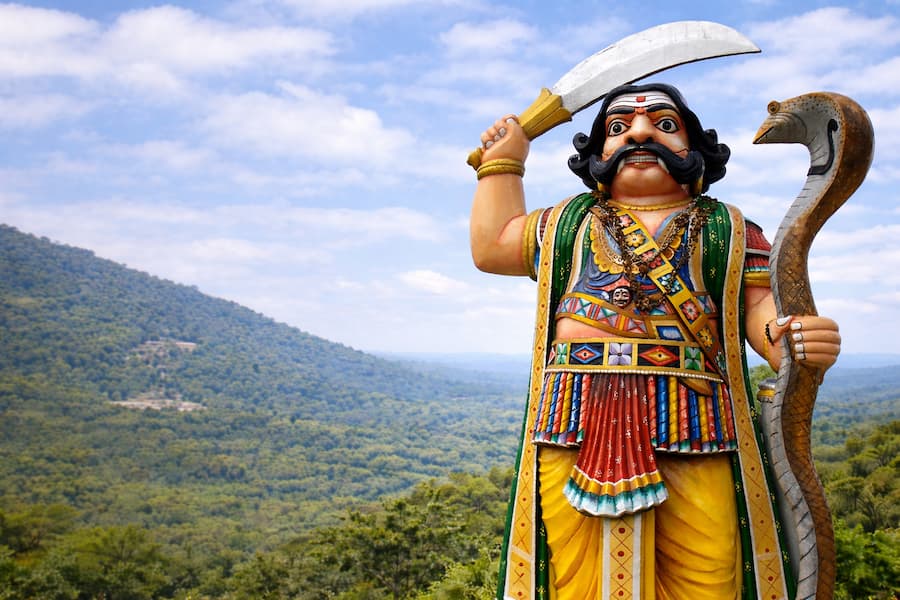
Why is Mysore called Mysore? The name Mysore (officially Mysuru) originates from the ancient legend of the demon king Mahishasura. The city was historically known as Mahishuru, meaning “the land of Mahisha.” Over time, Mahishuru evolved into Mysuru in Kannada, and the anglicised form became Mysore.
The story is deeply connected with Chamundi Hills, the revered Sri Chamundeshwari Temple, and the mythology of Goddess Chamundeshwari defeating Mahishasura. This legend forms the spiritual and cultural foundation of Mysore’s identity.
The Legend of Mahishasura
According to Hindu mythology, Mahishasura was a powerful demon king with the ability to transform into a buffalo. After performing severe penance, he received a boon that made him nearly invincible. Empowered by this boon, Mahishasura defeated the gods and ruled the region with arrogance.
To restore cosmic balance, the gods created Goddess Durga, who later manifested as Chamundeshwari. She fought Mahishasura atop what is now known as Chamundi Hills and ultimately defeated him. This victory symbolises the triumph of good over evil.
Today, the colourful Mahishasura Statue on Chamundi Hills stands as a reminder of this legend and is one of the most photographed landmarks in Mysore.
Connection with Chamundi Hills and Chamundeshwari Temple
The hill where Mahishasura was defeated came to be known as Chamundi Hills, named after Goddess Chamundeshwari. The famous Sri Chamundeshwari Temple sits atop the hill and remains one of the most important pilgrimage sites in Karnataka.
The Mysore Royal Family worshipped Chamundeshwari as their presiding deity. Even today, the grand Mysore Dasara Festival celebrates the goddess’s victory over Mahishasura, reinforcing the cultural identity of the city.
From Mahishuru to Mysuru to Mysore
The name Mahishuru gradually transformed linguistically over centuries:
- Mahishuru – Ancient Sanskrit/Kannada origin
- Mahisuru / Maisuru – Regional adaptation
- Mysore – British anglicised version
- Mysuru – Official Kannada name restored in 2014
In 2014, the Government of Karnataka officially reinstated the name Mysuru to reflect its historical and cultural roots. However, both Mysore and Mysuru continue to be used interchangeably.
Historical Significance of the Name
The legend of Mahishasura and Chamundeshwari is not just mythology—it shaped the region’s political and cultural evolution. The powerful Wodeyar dynasty, whose legacy is reflected in the magnificent Mysore Palace, embraced this symbolism as part of their royal identity.
Understanding the origin of the name Mysore adds deeper meaning when visiting major attractions such as: